
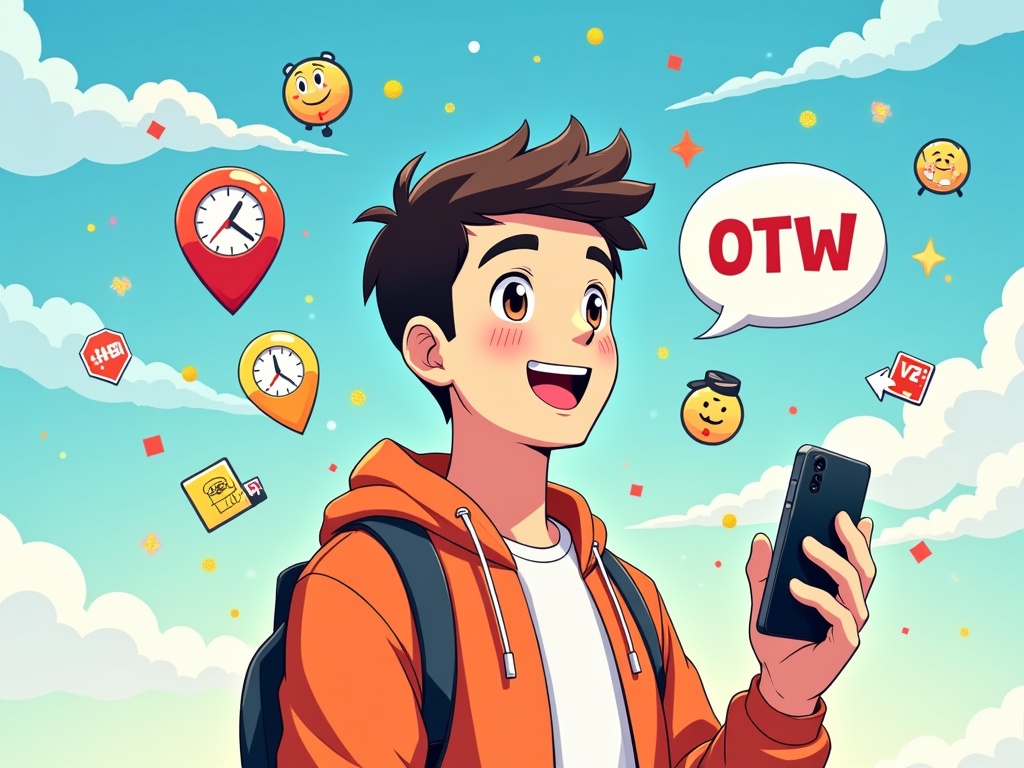
- What Does OTW Mean? A Deep Dive Into This Ubiquitous Slang
- OTW: More Than Just “On The Way”
- Origins and Evolution
- Variants That Keep It Fresh
- How To Use OTW Correctly?
- Pros and Cons of Using OTW in Communication
- A Journey Through Personal Experience
- FAQs About OTW
- What does OTW mean in texting?
- Is OTW the same as OMW?
- Can OTW mean something else?
- Is it okay to use OTW in professional communication?
What Does OTW Mean? A Deep Dive Into This Ubiquitous Slang
Friends, ever been waiting for someone to show up, and they hit you with a quick "OTW" text? At first glance, it seems straightforward — “on the way.” But peel back the layers of this seemingly simple acronym, and you reveal a whole subculture of digital communication, social nuance, and a dash of playful deception.
If you’ve ever chuckled at clever wordplay or explored witty pun jokes, you know how language can surprise and delight. OTW is no different—it’s part of a lively, evolving slang world rooted in identity, convenience, and sometimes, a little fib.
OTW: More Than Just “On The Way”
At its core, OTW stands for on the way. It’s the neat, efficient shorthand millions use daily in texts and social media to say, “I'm en route.” Whether you’re rushing to meet friends or just leaving the house, OTW sums it up with zero hassle.
But context adds flavor: imagine your friend texting "OTW" at 8 PM when you both agreed to meet at 7:30. They might still be binge-watching a series, using OTW as a soft veil over their tardiness. It’s a socially accepted cheeky excuse, a badge of “I’m coming, I swear!”
Origins and Evolution
The roots of OTW sprout from the early days of SMS, when every character counted. Back then, carrying a conversation with succinct abbreviations like LOL, BRB, and OTW wasn’t just trendy—it was practical. OTW spread from AOL Instant Messenger to the vast domains of Twitter, Instagram, and beyond.
Interestingly, younger generations—millennials and Gen Z—have embraced OTW not just as a functional phrase but as a cultural wink. It embodies the hustle of urban life filled with traffic jams, delays, and the art of managing social expectations without typing novels.
Variants That Keep It Fresh
- OMW: Almost a twin, this means on my way, slightly more personal but conveying the same idea.
- OTDub: A rare breed used in niche slang communities.
- Off to work: Another meaning of OTW, more literal, signaling someone heading to their job. But it's less common and can cause confusion without context.
Let's stretch this understanding with a practical comparison:
| Meaning | Usage Context | Commonality | Potential Confusion |
|---|---|---|---|
| On the way | Meeting friends, events | Very high | Low |
| On my way | Personal movement to meet | Very high | Low |
| Off to work | Starting work shift | Moderate | High (can be confused) |
| Otherwise | Less common, formal texts | Low | Moderate |
How To Use OTW Correctly?
Here’s the scoop: use OTW when you want to quickly let someone know you’re already on your way to them. The beauty is in its immediacy.
- “I’m OTW, just left the house!”
- “Relax, I’m OTW — see you soon.”
- It fits perfectly after someone asks, “Where are you?” or “What’s your ETA?”
However, use caution if your audience isn’t familiar with texting slang—sometimes OTW can be misinterpreted, especially if they think it means off to work instead.
Pros and Cons of Using OTW in Communication
| Pros | Cons |
|---|---|
| Concise and quick to type | Might confuse if audience unfamiliar with slang |
| Widely understood in youth culture | Can be used misleadingly (fake lateness excuses) |
| Conveys location status instantly | Not suitable for formal communication |
| Can soften the blow of tardiness | Context-dependent meaning (on the way/off to work) |
| Fits casual and informal contexts | Potential overuse dilutes impact |
A Journey Through Personal Experience
I remember texting "OTW" to a group of friends while stuck in a subway train that came to an unexpected halt. The message sailed confidently, promising arrival. In reality? We were moments away from a 20-minute delay. Everyone understood: OTW isn’t just a status update — it's a shared nod to unpredictability in our busy lives.
It’s similar to a wink that says, "I'm there in spirit even if traffic disagrees."
FAQs About OTW
What does OTW mean in texting?
Is OTW the same as OMW?
Can OTW mean something else?
Is it okay to use OTW in professional communication?
Sometimes, language becomes more than just words; it morphs into a compass directing our social dance. OTW may be brief, just three letters, but in them, we find the pulse of modern connection—quick, fluid, and just a little playful.
So the next time your phone buzzes with OTW, remember: someone isn’t merely en route; they’re part of a vibrant, fast-paced world where every moment counts and every text tells a story. And if they’re a bit late? Well, that’s the charm woven into this little phrase that’s bigger than its letters.